

What Most People Only Realize After Installation
Slat wall panels are everywhere right now.
On Pinterest boards, in café interiors, boutique hotels, showrooms, and modern apartment renovations.
They have a very specific effect: clean lines, architectural rhythm, and an instant "designed space"feeling.
At first glance, they seem like one of the easiest ways to upgrade a plain wall into something high-end.
And that' s exactly why so many people choose them.
But here' s what usually happens:
Most decisions are made from photos, mood boards, or a showroom sample.

Very few people stop to ask the real questions:
How will it look after a year of sunlight and cleaning?
What happens when humidity changes with the seasons?
Will it still look tight and aligned after installation stress?
Is the material actually suitable for the space it' s going into?
This is something many buyers only realize after installation, when it's already too late to change direction without cost or disruption.
Slat Wall Panels Are Not New
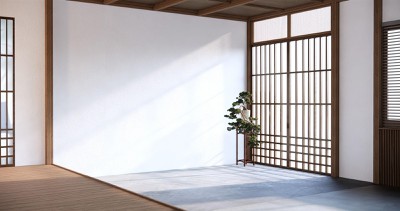
Slat design is not a trend. It has deep architectural roots.
You can trace its influence back to traditional Japanese interiors, Scandinavian minimalism, and mid-century European design language. The idea has always been the same: structure, rhythm, and controlled visual depth.
But something important changed in recent years.
The design stayed timeless.
The materials evolved completely.
And this is where most selection mistakes begin.
Because what you see online today is no longer limited to traditional wood craftsmanship. It' s now a mix of engineered polymers, composite materials, molded finishes, and lightweight structural systems designed for modern installation speed.
So when people say "Slat looks simple," what they' re really seeing is the result of material innovation-not traditional construction.
Why Solid Wood Looks Perfect
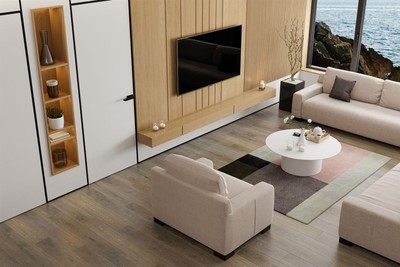
It' s easy to understand why solid wood Slat panels are so appealing.
In showrooms, they feel premium.
In photos, they look timeless.
In luxury interiors, they feel "real."
But in real-world applications, the situation becomes more complicated.
Because solid wood behaves like a living material.
What usually gets overlooked:
It is heavy and structurally demanding
Installation requires precision and strong wall support
Transport and handling increase cost significantly
It needs ongoing maintenance like sealing or repainting
It reacts to humidity, heat, and seasonal changes
Give it one or two heating and cooling cycles…
That's when small issues begin to appear:
slight warping, joint separation, surface fatigue, and alignment shifts.
And once Slat geometry loses alignment, even slightly, the entire wall starts to look less refined.
This is why solid wood slat systems are still mainly used in high-end hotels, luxury retail spaces, and boutique environments-places where maintenance budgets and controlled conditions are expected from the start.
For most residential or mid-scale commercial projects, it often becomes more effort than expected.
The Quiet Shift to Wood-Look Slat Panels
In recent years, a quiet but important shift has taken place in interior materials.
New-generation Slat panels made from PS (polystyrene), PU, and composite molding systems have started to replace traditional wood in many applications.
Not because they are "cheaper alternatives," but because the technology has changed what is possible.
Instead of printed textures or surface coatings, these materials often use precision molding to replicate wood grain structure at a physical level.
The result is surprisingly convincing:
They visually resemble real wood
They maintain consistent texture
They stay lightweight and easy to handle
They resist humidity and temperature changes
They require almost no maintenance
Many options are recyclable or environmentally optimized
This is the real reason Slat wall panels have moved from niche architectural projects into mainstream interiors.
Not just design preference.
Material evolution.
In many cases, the experience is simple:
you get the look of wood without the long-term limitations of wood.
Slat Width: The Detail That Changes Everything
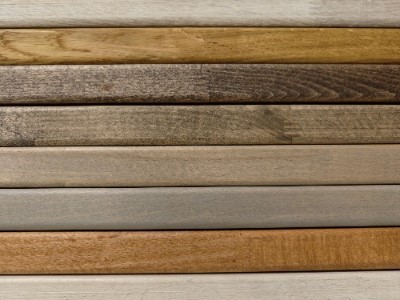
One of the most underestimated decisions in Slat wall design is slat width.
Most people choose it visually. They see a pattern they like and assume it will work.
But slat width directly affects spatial perception more than color or texture.
Here' s how it actually impacts a space:
Micro or ultra-thin slats → create a refined, tall, delicate visual effect. Ideal for compact rooms or minimalist interiors.
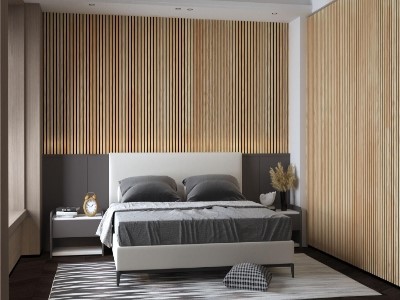
Small slats → balanced and versatile, suitable for living rooms, bedrooms, and home offices.
Medium slats → structured and stable, often used in commercial or hospitality spaces.
Wide slats → bold and architectural, best suited for large open interiors with strong lighting.
Choosing the wrong scale is one of the most common reasons Slat walls feel "off."
Not because the design is wrong-but because the proportion doesn't match the room.
A design that looks elegant in a showroom can feel crowded in a small apartment.
A design that feels subtle online can disappear in a large lobby.
Scale is everything.
Why Installation and Maintenance Matter More Than Design
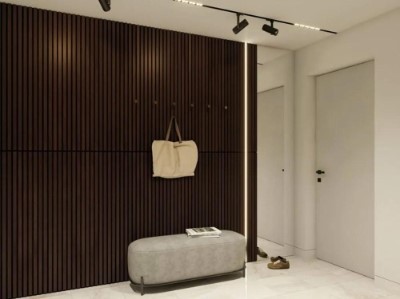
Slat panels are often chosen for appearance-but their long-term value depends on usability.
Modern systems have become popular for a few practical reasons:
Many now use click-lock or adhesive-friendly installation systems
They reduce or eliminate the need for repainting
Cleaning is usually simple and low-effort
The surface texture helps soften sound reflection in some spaces
This shift is important.
Because Slat walls are no longer just decorative panels-they are part of how spaces are built and maintained.
A beautiful wall that is difficult to maintain loses value quickly.
A simple system that stays consistent over time becomes part of the architecture.
Where Slat Wall Panels Actually Work Best
One of the biggest advantages of Slat systems is flexibility.
They are not limited to "feature walls." In fact, the most effective applications often go beyond that.
Common high-impact uses include:
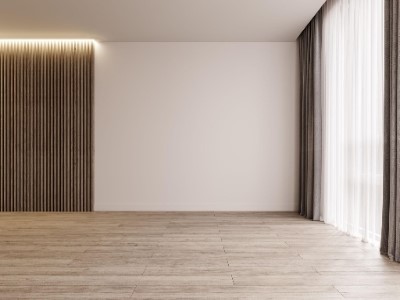
TV feature walls in living rooms
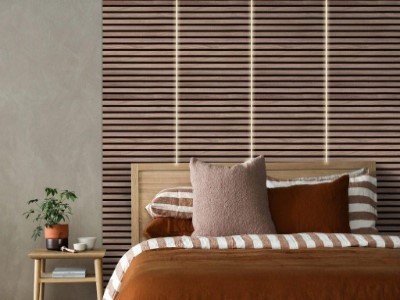
Headboard walls in bedrooms
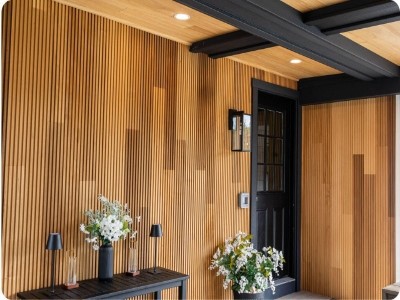
Entryway focal points
Ceiling design accents
Room dividers in open-plan spaces
Commercial partitions in cafés, offices, and retail spaces
When used correctly, Slat panels do more than decorate a surface.
They shape space.
They guide light, define zones, and create visual structure without building permanent walls.
Practical Design Tips Most Showrooms Don't Explain
In most showrooms, you see finished walls. What you don' t see is decision logic.
Here are a few real-world guidelines that make a major difference:
|
Small rooms |
choose micro or fine slats to avoid visual heaviness |
|
Large rooms |
medium or wide slats to maintain presence |
|
Need a brighter feel |
go for light oak or white tones |
|
Want mood and depth |
darker walnut or charcoal finishes work better |
|
Improve acoustics |
choose textured or deeper-profile designs |
|
Think beyond walls |
Slat works well on cabinets, doors, and partitions |
The key idea is simple:
Don't treat Slat panels as decoration. Treat them as spatial tools.
The Real Reason Slat Wall Panels Are Here to Stay
Slat wall panels are not a passing trend.
They are a long-standing design language that has become widely accessible only because materials and manufacturing have evolved.

Today, you don't need:
Solid wood budgets
Complex carpentry work
Long installation timelines
Heavy structural reinforcement
You only need:
The right material choice
The right slat proportion
And a clear understanding of your space
And that's usually the part people only fully understand after they' ve made the wrong decision once.
Because once installed, Slat panels don' t just fill a wall-they define how a space feels every single day.
And when chosen correctly, they do that quietly, consistently, and for years.


